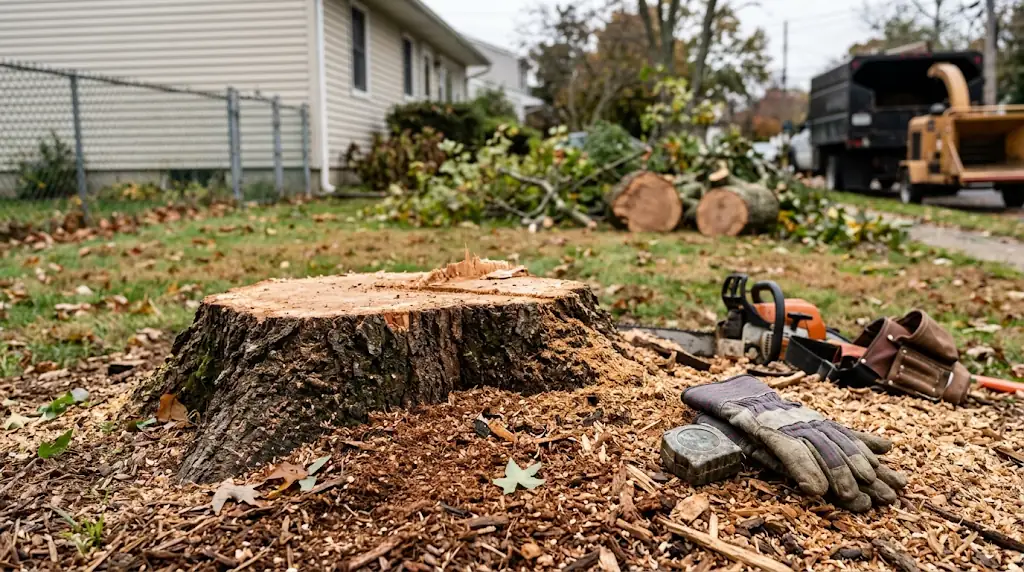
Tree removal on Long Island typically costs between $300 and $4,000+, with most Nassau County homeowners paying an average of $1,250 per mature tree. Final pricing depends directly on tree height, trunk diameter, proximity to overhead power lines, and physical access for heavy machinery like bucket trucks and cranes.
Cutting down a tree in suburban Nassau County carries operational challenges unique to dense neighborhoods. Narrow side yards in Levittown capes, overhead primary power feeds along rear property lines, and sandy, saturated coastal soils all dictate the equipment, labor hours, and risk calculations required to complete the job safely.
Long Island Tree Removal Cost Breakdown by Tree Size
The height and trunk caliper of the tree dictate the rigging techniques and crew sizes required. Taller trees demand controlled, section-by-section dismantling using aerial lifts or specialized climbing gear.
| Tree Size Category | Height Range | Average Cost Range | Typical Tree Types on Long Island |
| Small | Under 30 feet | $300 – $650 | Dogwood, Japanese Maple, Crabapple |
| Medium | 30 to 60 feet | $650 – $1,400 | Sweetgum, Birch, Red Maple, Eastern White Pine |
| Large | 60 to 80 feet | $1,400 – $2,500 | Red Oak, Pin Oak, Norway Maple, Sycamore |
| Extra Large / Hazardous | 80+ feet | $2,500 – $4,000+ | Mature White Oak, Beech, Tulip Poplar |
Note: The prices above reflect full sectional takedown, basic debris chipping, and brush cleanup. Stump grinding is an independent service with its own equipment setup requirements.
5 Primary Factors That Impact Tree Removal Pricing in Nassau County
Two trees of identical height can carry drastically different estimates. Pricing reflects direct operational risk and labor duration.
1. Proximity to Structures and Power Lines
Trees hanging over roofs, garages, sunrooms, or pools require systematic drop-rigging with lowering ropes, pulleys, and friction brakes. A backyard tree that leans over a secondary electrical line or service drop requires precision work. When branches infringe upon primary distribution lines, operations must coordinate with PSEG Long Island Tree Removal and Hazards protocols to ensure clearance safety before mechanical felling begins.
2. Machinery Access and Backyard Reach
Suburban parcel layouts heavily dictate equipment options:
- Direct Driveway Access: Lowers costs. Crews can position a 75-foot bucket truck and high-capacity chipper right next to the tree.
- Fenced Backyards with Narrow Gates: Common in Levittown and East Meadow. Standard 36-inch pedestrian gates prevent mini skid steers from hauling timber. Crews must carry heavy wood out by hand or cut it into smaller, slower-to-haul billets, adding significant labor hours.
- Crane Requirements: If a massive oak sits behind a house with zero side access, a crane must lift multi-ton timber sections over the roof of the home. Crane rentals add $1,200 to $2,500 to the total base job cost.
3. Tree Condition and Structural Integrity
Dead trees do not cost less to remove than live ones; they often cost substantially more. A rotting or hollow tree cannot support the weight of a climber using spurs and flip lines. In cases of severe root rot or trunk degradation, arborists cannot safely tie into the canopy and must use specialized machinery to secure limbs before cutting.
4. Regional Soil Composition and Weather Exposure
Long Island’s South Shore communities (Merrick, Bellmore, Massapequa) feature high water tables and sandy loam soils. Heavy coastal nor’easters, winter blizzards, and hurricane-force gusts routinely destabilize shallow root systems, causing root-plate lifting. Unstable, uprooted root plates store thousands of pounds of kinetic energy, requiring technical anchoring and saw cuts to avoid violent kickbacks during cutting.
5. Municipal Permits and Administrative Compliance
Townships enforce clear boundaries between private trees and public right-of-way zones:
- Town of Hempstead: Removing a curbside or street tree planted between the sidewalk and curb requires an official permit processed through the Town of Hempstead Highway Department Permits & Forms. Unpermitted removal of municipal street trees results in town summonses and mandatory replacement fees.
- Town of Oyster Bay: Incorporating Plainview and Farmingdale, municipal codes require formal applications for protected trees through the Town of Oyster Bay Tree Removal Application to ensure conservation guidelines are met.
Additional Service Costs: Stump Grinding, Hauling, and Emergencies
Standard quotes generally include cutting the tree down flush to within 3 to 6 inches of ground level. Optional services carry separate price schedules:
- Stump Grinding: Costs between $100 and $350 per stump, based on diameter and root flare spread. Grinding 6 to 12 inches below grade prevents subterranean honeycombing, carpenter ant colonization, and termite attraction.
- Log Hauling and Splitting: Standard pricing includes chipping all limbs up to 10–12 inches in diameter. Hauling massive trunk wood off-site requires heavy trailering and commercial transfer station tipping fees, adding $150 to $500 depending on total tonnage.
- 24/7 Emergency Storm Dispatch: A fallen tree puncturing a roof or crushing a driveway following a storm requires rapid stabilization. Emergency crew mobilizations during live weather events range from $1,500 to $5,000+, which is often covered under the dwelling protection clause of a homeowner’s insurance policy.
Service Areas Covered
Levittown Tree Removal delivers licensed and insured residential tree care across central and southern Nassau County:
- Levittown, NY (Single-family capes, narrow-lot backyard removals)
- East Meadow, NY (Suburban root-clearing, high-canopy oak management)
- Farmingdale, NY (Boundary tree management, commercial and residential lots)
- Merrick, NY (South Shore storm mitigation, wind-damaged pine extraction)
- Bellmore, NY (High water table mitigation, salt-spray canopy clearances)
- Plainview, NY (Deep-rooted maple management, hillside grading clearances)
- Westbury, NY (Zero-clearance estate tree work, selective thinning)
Frequently Asked Questions
Does homeowner insurance cover tree removal on Long Island?
Insurance covers tree removal only if the tree falls on an insurable structure like a house, garage, or certified perimeter fence. Policies pay for removing the section off the damaged structure, structural repairs, and haul-away up to policy limits (typically $500 to $1,000 for debris). Insurance does not pay for removal if a tree falls harmlessly in the middle of a grass lawn.
Can a neighbor force you to take down a leaning tree?
Under New York State law, you are not liable for damage caused by an “Act of God” if a healthy tree falls onto a neighboring yard during a storm. However, if your neighbor sends a certified, formal letter warning you that a tree is dead or structurally decayed, and you fail to address it, your legal standing shifts to negligence. In that scenario, you or your insurer become responsible for all third-party damages.
Why is stump grinding priced separately from tree removal?
Tree cutting and stump grinding use completely distinct commercial machinery. Chippers and bucket trucks cannot grind a stump below the topsoil. Running high-speed carbide cutting teeth through rocky Long Island soil dulls blades quickly and requires a dedicated operator and secondary transport trailer.
Get a Transparent Local Tree Removal Estimate
Dead wood, cracked canopy joints, and top-heavy canopies pose massive liabilities when seasonal coastal gales strike Long Island. Levittown Tree Removal deploys certified arborists equipped with high-reach aerial lifts, low-impact backyard machinery, and stump grinders to protect your yard and structures. To review your trees and receive a straightforward, comprehensive estimate, reach out through our contact page today.